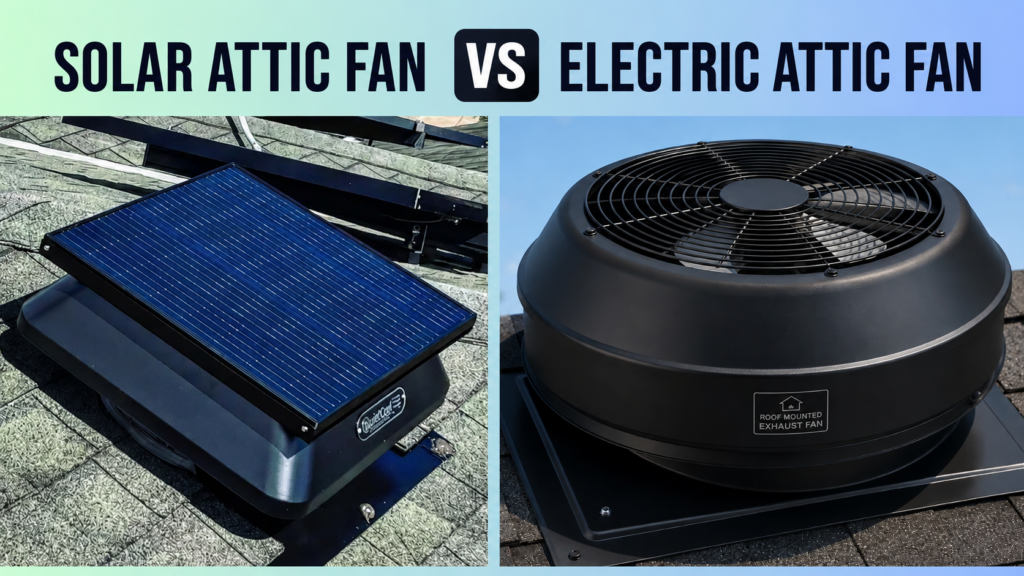
Attic ventilation is an important part of maintaining a comfortable and energy-efficient home. During hot weather, attics can trap excessive heat, causing higher indoor temperatures, increased air conditioning costs, and even damage to roofing materials over time. That is why many homeowners install attic fans to improve airflow and reduce heat buildup.
Two of the most popular options are solar attic fans and electric attic fans. While both are designed to ventilate the attic and remove hot air, they work differently and offer unique benefits.
If you are wondering which one is better for your home, this guide will help you compare the advantages, disadvantages, costs, and performance of both systems.
What Is a Solar Attic Fan?
A solar attic fan is powered by sunlight using a built-in or attached solar panel. Instead of using electricity from your home, the fan operates using solar energy collected during the day.
These fans automatically become more active when the sun is strongest and attic temperatures are highest. Solar attic fans are often chosen by homeowners who want an energy-efficient and environmentally friendly cooling solution.
What Is an Electric Attic Fan?
An electric attic fan uses your home’s electrical system for power. These fans are typically connected to a thermostat or humidistat that automatically turns the fan on when attic temperatures or humidity levels rise.
Electric attic fans are known for their strong airflow and reliable operation in all weather conditions, including nighttime and cloudy days.
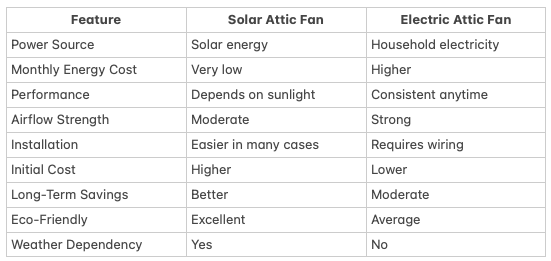
Solar Attic Fan vs Electric Attic Fan
Advantages of Solar Attic Fans
- Lower Energy Bills
One of the biggest advantages of solar powered attic fans is energy savings. Since they run on sunlight, they do not add extra electricity costs to your monthly utility bill.
During hot summer months, reducing attic heat can also help lower air conditioning usage inside the home.
- Environmentally Friendly
Solar attic fans use renewable energy from the sun, making them a greener choice compared to electric fans. They help reduce overall energy consumption and lower your home’s carbon footprint.
- Works Best During Peak Heat
Solar attic fans naturally work hardest when the sun is strongest and attic temperatures are highest. This helps remove trapped heat exactly when your home needs ventilation the most.
- Lower Operating Costs
After installation, operating costs are extremely low because sunlight powers the fan for free. Over time, this can help homeowners recover the higher upfront investment.
- Easier Installation
Many solar attic fans do not require complicated electrical wiring. In some cases, installation can be quicker and less expensive than installing a hardwired electric fan.
Read More: How Roof Mounted Attic Fans Improve Home Ventilation
Disadvantages of Solar Attic Fans
- Higher Upfront Price
Solar attic fans usually cost more initially because of the solar panel and specialized components.
- Depends on Sunlight
Performance can decrease during cloudy weather, rainy days, or nighttime because the fan relies on solar energy.
- Less Powerful Airflow
Some solar attic fans may not move as much air as electric models, especially in large attics or extremely hot climates.
Advantages of Electric Attic Fans
- Stronger Ventilation
Electric attic fans are generally more powerful and can move large amounts of hot air quickly. This makes them ideal for larger homes and bigger attic spaces.
- Reliable in All Weather Conditions
Unlike solar fans, electric attic fans continue working during cloudy days, storms, and nighttime because they are connected to household electricity.
- Lower Initial Cost
Electric attic fans are usually more affordable to purchase upfront compared to solar-powered systems.
- Better Moisture Control
Because electric attic fans can run consistently, they are often better for controlling humidity and moisture buildup in attics during colder or wet seasons.
Disadvantages of Electric Attic Fans
- Higher Electricity Usage
Electric attic fans increase household electricity consumption, which can lead to higher monthly utility bills.
- Professional Wiring May Be Needed
Most electric attic fans require proper electrical installation, which can increase labor and installation costs.
- Not as Eco-Friendly
Since electric attic fans depend on grid electricity, they are less environmentally friendly than solar-powered alternatives.
Which Attic Fan Is Better?
The best attic fan depends on your home, climate, and priorities.
A Solar Attic Fan Is Best If:
- You live in a sunny climate
- You want lower energy bills
- Eco-friendly upgrades matter to you
- You prefer low operating costs
- Your attic is medium-sized
Solar attic fans are especially popular in warm and sunny areas where attic temperatures remain high for much of the year.
An Electric Attic Fan Is Best If:
- You need stronger airflow
- Your attic is large
- You want ventilation day and night
- Your area has frequent cloudy weather
- You need reliable moisture control
Electric attic fans are often the better option for homeowners who prioritize consistent performance and powerful ventilation.
Can You Use Both?
Yes. Some homeowners choose hybrid systems that combine solar and electric power. These systems use solar energy during sunny periods and switch to electricity when sunlight is unavailable.
Hybrid attic fans provide more consistent performance while still reducing overall electricity usage.
Final Thoughts
Both solar attic fans and electric attic fans offer valuable benefits for improving attic ventilation and reducing heat buildup.
A solar attic fan is an excellent choice for homeowners looking for energy efficiency, lower long-term operating costs, and environmentally friendly cooling. Many homeowners also explore the benefits of the solar attic fan tax credit Hawaii programs and incentives when considering installation, making solar-powered ventilation even more attractive for reducing energy expenses in Hawaii’s warm climate.
An electric attic fan is better for homeowners who need powerful airflow and dependable ventilation in all weather conditions.
Before choosing between the two, consider your climate, attic size, energy goals, and budget. The right attic fan can improve comfort, protect your roof, and help reduce cooling costs for years to come.
Frequently Asked Questions (FAQs)
1. Are solar attic fans worth the money?
Yes, solar attic fans can be worth the investment for homeowners living in sunny climates. They help reduce attic heat, improve ventilation, and lower cooling costs without increasing electricity usage.
2. Do solar attic fans work at night?
Most standard solar attic fans do not operate at night because they rely on sunlight for power. However, some models include battery backup systems that allow nighttime operation.
3. Which attic fan is more energy efficient?
Solar attic fans are generally more energy efficient because they use renewable solar energy instead of household electricity.
4. Are electric attic fans more powerful than solar attic fans?
Yes, electric attic fans are usually more powerful and can move larger amounts of air. They are often better for large attic spaces or homes with severe heat buildup.
5. Can attic fans reduce air conditioning costs?
Yes, attic fans help remove trapped hot air from the attic, which can reduce indoor temperatures and decrease the workload on your air conditioning system.